
S&P 500 Breakdown: Is Friday's Selloff the Start of a Larger Decline?
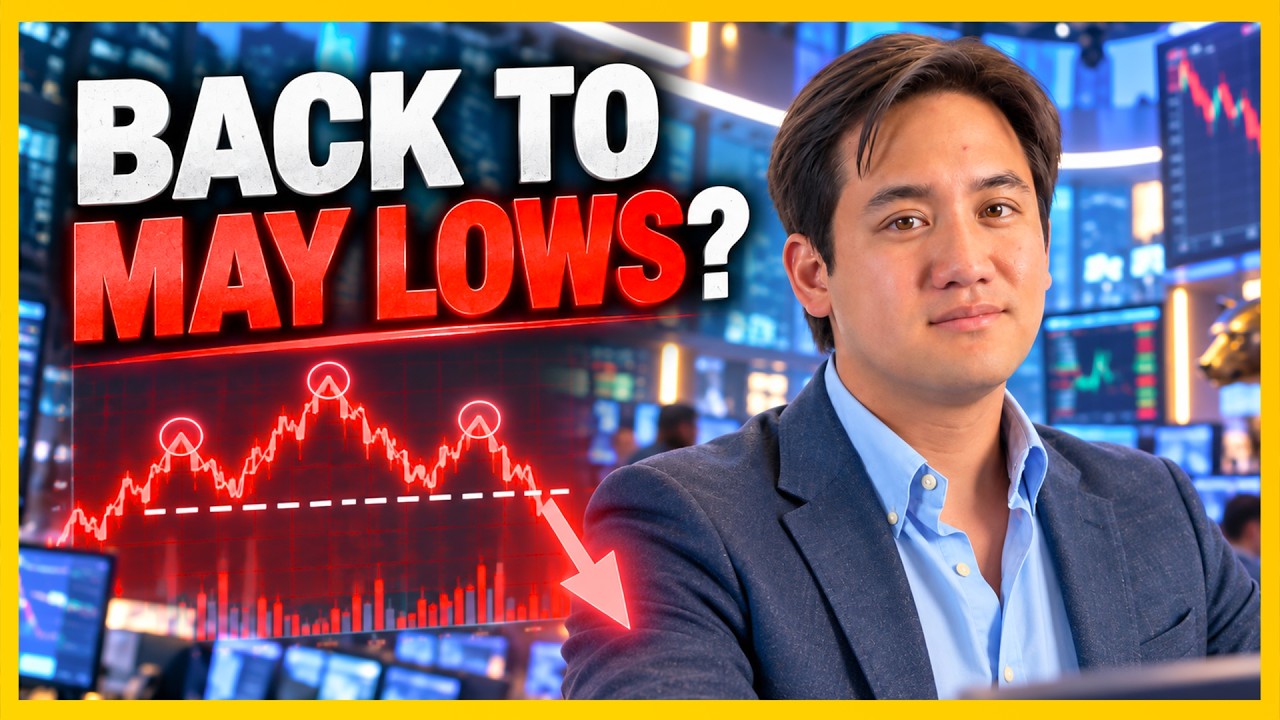
Friday's sharp selloff in U.S. equities broke a critical technical support level on the S&P 500, prompting the question every investor is now asking: was this a geopolitically driven one-off, or the beginning of something more structurally significant? The answer, based on chart structure and underlying economic data, points toward the latter.
While the Iran conflict and elevated oil prices are contributing factors, the more consequential drivers of market risk are rooted in deteriorating economic fundamentals — weakening employment, rising inflation, and private credit stress — that predate the current geopolitical flare-up.
The S&P 500 Breaks a Critical Support Level
The S&P 500 fell 1.33% on Friday, and the technical damage extended beyond the price decline itself. The index broke below the 6,790 level — a zone that had been tested repeatedly and held with remarkable consistency. That support has now been breached.
Support levels are only relevant until they fail. When a level that has absorbed multiple tests finally gives way, it signals a shift in market structure. The 6,790 break is precisely that kind of signal.
Don't Be Fooled by the Inevitable Bounce
A near-term relief rally remains likely, particularly if the Iran situation stabilizes and oil prices pull back from current levels above $90 per barrel. However, any such bounce should be understood in context: it would represent a technical reaction within a broader topping process, not a resumption of the bull market.
The non-farm payrolls print of -92,000 jobs was reported before the escalation in the Middle East. That matters because it strips away the geopolitical explanation and reveals an economy that was already softening. A relief rally driven by oil pulling back to $70–$80 per barrel should not be mistaken for a fundamental improvement.
Geopolitics as a Catalyst, Not the Cause
Oil near $90 is adding pressure, and sustained elevated energy prices would accelerate economic deterioration. But the narrative that Iran is the driver of this selloff misses the broader picture.
Even at $150 crude — levels seen historically — markets can absorb the shock if the underlying consumer is strong. The difference today is that the consumer is not strong. Corporate layoffs tied to AI displacement are accelerating. Block has cut 50% of its workforce; Oracle is executing thousands of additional reductions. The unemployment rate has risen to 4.4% and, based on current trajectory, could exceed 5% by early 2027.
A major bank's $126 million loan write-down disclosed Friday underscores the private credit stress already building beneath the surface. American Express fell nearly 24% from its December high of $387 to a Friday low of $295 — a significant move for one of the world's largest financial institutions, and a signal that credit conditions are tightening in ways that will weigh on markets well beyond any geopolitical resolution.
Macro Warning: Stagflation Risk
The convergence of weaker jobs data and rising inflation creates the most challenging macro environment for equities: stagflation.
PPI came in hot. PCE was hot. CPI, while slightly more benign, is trending in the wrong direction. Critically, none of those readings yet reflect the impact of oil above $90. When the next round of inflation data arrives incorporating current energy prices, the picture is likely to deteriorate further.
Slowing growth, rising unemployment, and reaccelerating inflation do not create a constructive environment for risk assets — and the charts are already reflecting this reality.
Broader Index Structure: Inverse Cup and Handle
Zooming out on the S&P 500, the long-term chart is forming what appears to be an inverse cup and handle pattern — a bearish formation that historically precedes significant downside moves.
The structure is built from three major sell-off lows along a lower parallel trend line (including the COVID low, the 2022 bear market low, and the Liberation sell-off low), with the bull market high tagging a corresponding upper resistance line. The current price action is carving out the handle portion of this formation.
The scenario that unfolds from here: the current oil-driven pullback completes the rounding top portion of the pattern, a relief rally driven by oil resolution forms the handle, and then economic fundamentals — private credit deterioration, rising unemployment, and stagflation pressures — deliver the larger leg down. A measured move from this pattern targets the 5,600 area on the S&P 500. Getting there will likely take months and will involve multiple bounces, but the directional risk is clearly lower.
Dow and Nasdaq: Confirming the Picture
The Dow Jones Industrial Average broke sharply from a key trend line resistance near 50,000, a level that had been clearly defined in advance. Major support now sits near 45,700. The pattern closely parallels what is playing out on the S&P.
The Nasdaq held up comparatively better on Friday, with large-cap tech names like Microsoft and Alphabet closing roughly flat. The NASDAQ's key break level, drawn from the 2021–2022 bear market lows and the Liberation sell-off low, was not breached Friday. This relative strength may support a short-term bounce in tech, but the larger pattern structure remains the same.
Key Levels and Market Outlook
The weight of evidence — technical structure, macro data, credit conditions, and sector behavior — supports a view that the bull market has topped. The path lower will not be a straight line; short-term bounces, including potentially a meaningful one, are part of the process.
For context, the pattern mirrors what played out in Bitcoin: an initial decline from the high, a period of consolidation and bouncing, followed by the larger structural breakdown. The equity market appears to be tracing a similar sequence, simply lagging the crypto chart.
The key discipline here is not getting caught up in the narrative of geopolitical resolution as a reason to re-enter the market aggressively. The underlying fundamentals were already deteriorating before the Iran conflict emerged. When oil eventually pulls back and sentiment briefly recovers, that relief should be treated as an opportunity to reassess exposure — not as a signal that the risk is off the table.
This article is intended for informational and educational purposes only and does not constitute financial advice. All trading involves risk. Past performance is not indicative of future results. Trading involves substantial risk. All content is for educational purposes only and should not be considered financial advice or recommendations to buy or sell any asset.
Trading involves substantial risk. All content is for educational purposes only and should not be considered financial advice or recommendations to buy or sell any asset. Read full terms of service.