
My Trading Game Plan Revealed - 04/14/2026: S&P Near Key Resistance, CAR Gamma Squeeze Warning, Software Rally and Intel Short Setup

Fnancial markets are currently presenting a major dichotomy. On one side, we are witnessing explosive, sentiment-driven rallies in heavily shorted names and battered software stocks. On the other, major indices are approaching critical technical resistance levels that demand a highly disciplined, probability-based approach. In this morning's My Trading Game Plan show, Gareth Soloway, Chief Market Strategist at VerifiedInvesting.com, dissected these diverging market narratives, offering viewers a masterclass in technical analysis, risk management, and the psychology of institutional trading.
Today's article expands on the critical themes covered in the show, providing deeper context into the S&P 500's current trajectory, the mechanics of a dangerous gamma squeeze, and the specific technical setups that savvy traders are monitoring across equities, commodities, and cryptocurrencies.
The S&P 500's Upside Limits: A 2025 Comparison
The broader market has shown remarkable resilience, largely driven by algorithmic trading tied to the energy sector. Following a significant gap up in oil prices on Sunday night, crude faded throughout Monday's session. Because institutional algorithms frequently trade the S&P 500 inversely to oil, this steady decline in crude provided the exact fuel needed for the S&P to grind higher, pushing the SPY ETF above a key resistance area.
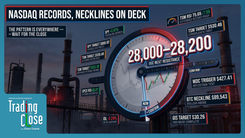
However, the next major test is looming immediately overhead. The S&P 500 is staring down a critical gap fill at 689.09 on the SPY ETF. Sitting roughly 14 points away from the open, this level represents the immediate battleground for bulls and bears. If the market pushes through this gap fill, a retest of all-time highs becomes highly probable. But before investors rush in expecting a massive, sustained breakout, a vital historical comparison is required.
Many retail investors are currently experiencing a sense of deja vu, assuming the market will replicate the massive run we saw following the 2025 tariff sell-off. Exactly one year ago, the market bottomed around April 7th and 8th, eventually surging 23% to an October peak. But the technical structure of today's market is fundamentally different.
During last year's bottom, the S&P 500 was sitting at the very bottom of a massive parallel channel that dates back to the March 2020 COVID-19 bear market lows. That positioning offered tremendous upside. Today, the recent pullback only brought the market to the midpoint of that same parallel channel.
From a mathematical and technical standpoint, bouncing from the midpoint severely limits the market's remaining upside. Even if the S&P 500 manages to tag the upper end of this multi-year upsloping trend line, the maximum upside is roughly 4% to 5%.
"I'm going to slowly short the market as we go higher in my own portfolio and with members in Smart Money: Stocks and ETFs, expecting a retrace to occur," Gareth noted, highlighting the stark difference in the current reward-to-risk metric compared to last year.
Software Surges and the Discipline of Scaling Out
While the broader market faces overhead resistance, specific sectors have offered tremendous opportunities for those who bought the recent fear. Software stocks, which had been severely beaten down, staged a massive reversal. Oracle (ORCL) led the charge, gaining an impressive 12.69% yesterday and continuing to gap up today after perfectly filling a technical gap on Friday. Salesforce (CRM) followed suit with a near 5% gain, alongside strong action in Adobe (ADBE).
These moves validate the strategy of buying technically oversold, high-quality assets at major support levels. However, the true lesson here isn't just about the entry—it's about the exit strategy.
As these software names surged, generating 7% to 10% profits in a matter of days, the professional move is to begin taking risk off the table. This practice, known as "legging out," is the inverse of dollar-cost averaging into a position. By securing partial profits as a stock moves deeper into the money, traders protect their capital while allowing the remaining position to capture further upside. It is a precautionary measure that institutional traders use to build portfolios consistently, removing the emotional urge to hold out for the absolute top.
The Anatomy of a Gamma Squeeze: Warning Signs in CAR
Perhaps the most urgent warning from today's analysis centered on Avis Budget Group (CAR). The stock has gone parabolic, rocketing from under $100 to almost $400 a share. For veteran traders, this price action is immediately reminiscent of the historic GameStop and AMC short squeezes of 2021.
What we are witnessing in CAR is a textbook "gamma squeeze." This phenomenon occurs when retail traders aggressively buy out-of-the-money call options. To facilitate these trades, institutions and market makers sell the calls. However, to hedge their own risk and remain market-neutral, these institutions are forced to buy the underlying stock. This creates a reflexive feedback loop: buying calls forces institutions to buy the stock, which drives the price higher, which forces more hedging, and so on.
"I did some analysis… using my new psychology scanner. We basically have a gamma squeeze… But what that forces is institutions to then buy the underlying stock to protect themselves. And once that ends, this is going to crash," Gareth explained.
The fundamentals of CAR do not support a $400 valuation. The company carries a massive amount of debt, and the valuation has become entirely detached from reality. When the retail options buying eventually pauses, institutions will no longer need to hedge. They will begin unloading massive blocks of shares into the market, triggering a panic among retail holders.
In the pre-market, CAR had already shown signs of cracking, dropping from $371 to $352. When the true break happens, a single-day drop of over $100 is highly probable, with near-term targets sitting between $150 and $200, and potentially as low as $260 once the panic selling accelerates. For traders looking to short this anomaly, position sizing is paramount. Entering with a small fraction of normal size allows a trader to survive the irrational volatility and dollar-cost average if the squeeze temporarily pushes higher.
Banking Earnings and the Anatomy of a Pivot High
Earnings season is officially underway, with major financial institutions setting the tone. JPMorgan Chase reported strong numbers, but as is customary, CEO Jamie Dimon provided cautionary forward guidance, leaving the stock trading flat. Citigroup, however, caught a bid and pushed higher.
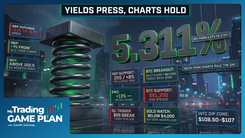
For traders looking at Citigroup's chart, the current action doesn't offer an immediate short, but a clear swing trade setup is forming overhead. A major trend line sits between $136 and $137. If the stock pushes into this zone in the coming days, it presents a high-probability short entry.
This setup provided an opportunity to discuss a crucial technical concept: identifying a major pivot high versus a minor pivot high.
"These are the things when you're learning how to decipher what a major pivot high is versus a minor, these are like the tidbits, the little gems of wisdom that I like to give you guys… to help you elevate your game to essentially an institutional level," Gareth shared.
A major pivot high is characterized by having no price action above it on one side for an extended period, followed by a deep, significant correction on the other side. Minor pivots, by contrast, are quickly surpassed by subsequent price action and feature shallow pullbacks. By learning to identify true major pivot highs, traders can locate the exact levels where institutional supply will overwhelm retail demand.
Semiconductor Exhaustion: The Intel Setup
While software stocks bounced from oversold conditions, the semiconductor sector continues to grind higher, setting up what could be a major cycle top. Intel (INTC) is the prime example of this technical exhaustion.
Late last year, Intel was trading around $20 per share, with its survival against competitors like Nvidia openly questioned. Following government intervention and investment, the stock has surged 250%. More recently, it has posted nine consecutive up days, rallying over 60% from its recent swing low.
Vertical moves of this magnitude are mathematically unsustainable. Intel is now approaching a massive, multi-year trend line at approximately $67 per share.
When a stock travels this far, this fast, and collides with a major historical trend line, the probability of a rejection is incredibly high. A short entry at the $67 level carries an estimated 75% to 80% success rate for a near-term pullback. It is the definition of a high-probability swing trade, built purely on chart logic rather than fundamental narratives.
Commodities and Crypto: Strategic Floors and Reversion Trades
The commodity and cryptocurrency markets are currently trading on a mix of geopolitical realities and extreme sentiment shifts.
Oil's Strategic Floor: Crude oil is testing a parallel breakdown that could send prices back down to the $80 to $75 range. However, there is a massive fundamental backstop at $75. Following the recent energy crisis and the surprise block of the Strait of Hormuz, nations that depleted their strategic petroleum reserves were caught vulnerable. These countries will view the $75 to $80 range as a mandatory accumulation zone to replenish their reserves. Until the U.S. enters a confirmed recession, this geopolitical buying pressure creates a hard floor for oil prices.
Precious Metals: Gold saw a slight uptick today, though its net technical pattern remains bearish in the short term. It could potentially rally toward $5,000 before initiating its next leg down, with a longer-term macro target still sitting at $3,500 per ounce. Silver is similarly grinding higher toward resistance at $82. If it fails there and breaks below the critical $66 to $64 support zone, a flush down to $50 remains on the table for later this year.
Bitcoin's Sentiment Reversal: Bitcoin provides a perfect case study in sentiment extremes. After hitting a low of $60,000 and printing a reversal green candle, the prevailing sentiment among retail crypto traders became overwhelmingly bearish. In financial markets, when sentiment becomes universally bearish at a technical support level, it often acts as a bullish catalyst—a reversion trade.
Bitcoin has since rallied to just under $75,000. It faces immediate minor resistance at a pivot top near $76,000. If it can clear that hurdle, the chart points to a parallel resistance pierce at $80,000, fulfilling the $80,000 to $85,000 upside target.
Conclusion: Be the Casino, Not the Gambler
The overarching theme of today's market analysis is the absolute necessity of probability-based thinking. Whether it's recognizing the limited 4% upside in the S&P 500, identifying the mathematical unsustainability of the CAR gamma squeeze, or waiting patiently for Intel to hit a $67 trend line, successful trading is entirely devoid of emotion.
"You want to be the house, the casino, not the gambler, right? The gambler has odds at 50-50 or less… We want to have it at 60, 70, 80% success rate," Gareth emphasized.
Retail investors often gamble on narratives—hoping a stock like CAR goes to the moon, or assuming the broader market will repeat last year's exact performance despite being in a completely different technical position. Professional traders operate like the casino. They wait for setups where multiple technical factors align to create a 75% to 80% probability of success. They accept that losses are a part of the business, but they know that over a large enough sample size, the mathematical edge will always print money.
By stripping away the hype, ignoring the news cycle, and focusing purely on the logic of the charts, investors can navigate this complex market environment with clarity, discipline, and consistent profitability.
Trading involves substantial risk. All content is for educational purposes only and should not be considered financial advice or recommendations to buy or sell any asset. Read full terms of service.