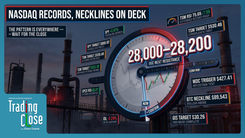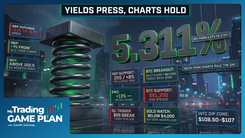

Trading The Close Market Recap - 12/22/2025: VIX Complacency, Rising Yields and a 2026 Commodity Rotation

As the year winds down, markets are often characterized by lower volume and a festive drift, but beneath this placid surface, significant technical patterns and warning signs are forming. In today's episode of Trading The Close, Master Trader Gareth Soloway of Verified Investing peeled back the layers of the current rally, revealing potential storm clouds gathering for January and highlighting specific setups where disciplined traders can find an edge. From extreme complacency signaled by the VIX to powerful moves in commodities, the stage is being set for a dynamic start to 2026.
The Holiday Calm Before the January Storm?
History often provides a valuable roadmap for navigating current market conditions, and a compelling seasonal parallel is emerging. As traders look at the current price action, it bears a striking resemblance to the period around Thanksgiving of the prior year. A brief period of selling was followed by a low-volume holiday week that allowed the market to drift higher, only to be met with institutional selling once the new month began.
Chief Market Strategist Gareth Soloway points out the similarity to our current situation: “We have this Christmas holiday, which is doing the same sort of thing. We went up, then we had a little selling, now the Christmas holiday into New Year's lets us float up and then we see the decline.” This pattern suggests that while the path of least resistance may be higher into the year's end, the real test will come in early to mid-January when institutional players return in full force. This isn't a guarantee of a decline, but a historical precedent that warrants caution and preparation for increased volatility as the calendar flips.
The Complacency Index: A Blaring Warning Sign
One of the most significant red flags waving in the market right now is the CBOE Volatility Index, or VIX. Often called the "fear gauge," the VIX is currently signaling the exact opposite: extreme, unadulterated complacency. Today, the VIX closed at 14.11, a level not seen since December of 2024. This indicates that the market's expectation of future volatility is exceptionally low, and demand for portfolio insurance (in the form of options) has dried up.
While a low VIX might seem bullish on the surface, experienced traders view it as a potent contrarian indicator. Gareth explains the psychology at play: "When the VIX is super low, people are saying, oh, I can't lose, the markets will always go up… And they have that feeling of, you can't lose, and the market always senses that. And when it gets to be an extreme like this… it's ripe for something to surprise the markets."
A healthy market climbs a "wall of worry." A VIX level around 20, for instance, suggests traders are on edge but not panicking, creating a sustainable environment for a rally. However, when the VIX drops to levels like 14, it implies that virtually no one is expecting problems. Historically, this is precisely when unexpected geopolitical events or negative economic data can have an outsized impact, catching an unprepared market off guard and triggering a sharp reversal.
Unseen Tremors in the Bond Market
While equity markets drift higher on holiday cheer, the bond market is sending a different, more ominous message. Contrary to the prevailing narrative that interest rates are set to decline, the chart of the 10-year Treasury yield is forming a classic bull flag. This technical continuation pattern suggests that after a period of consolidation, the next major move in yields is likely to be higher.
This potential for rising rates in the U.S. is being echoed overseas. The Japanese 10-year yield is surging, recently trading at 2.074%. As one of the world's benchmark rates, a significant move in Japanese government bonds can create ripple effects across the global financial system, putting pressure on other sovereign bond markets and, by extension, equity valuations. These developments in the credit markets are a critical undercurrent that could disrupt the calm in stocks and serve as a catalyst for the January volatility that seasonal patterns suggest may be coming.
Precision Setups in a Complacent Market
Even as broad market indicators flash warning signs, opportunities for disciplined traders continue to emerge in individual stocks. Today's analysis highlighted several key names with distinct technical setups.
Micron (MU): A perfect example of precision trading unfolded in Micron. Gareth identified $280 as a prime shorting level in his morning game plan. The stock rallied throughout the day, reaching a high of exactly $279.99 before being rejected. This wasn't a coincidence; it was the result of algorithms and traders "front-running" a major technical resistance level. For those who missed the entry, patience is key. The resistance trendline is dynamic, and tomorrow, the ideal short entry will move up to approximately $283.
Carvana (CVNA): Labeled as a favorite short going into the new year, Carvana exemplifies a classic "sell the news" scenario. The stock experienced a massive run-up fueled by hype surrounding its inclusion in the S&P 500. As Gareth explained, this phenomenon is predictable: "Investors rush in because they know that all the ETFs and funds that track the S&P have to buy that stock… but it's not based on fundamentals." Once the stock is officially added and the forced buying is complete, the price often corrects sharply to a valuation more aligned with its underlying business performance. Despite a positive day for the broader market, Carvana traded lower and appears poised to continue its descent toward the $400 level.
Rigetti Computing (RGTI): On the other side of the spectrum is Rigetti, a supercomputing stock that surged over 13% today. This stock illustrates the power of contrarian thinking. At its peak, bullish sentiment was rampant, which marked the top. After a prolonged and brutal decline, the stock fell off everyone's radar. It is in this environment of neglect and despair that true bottoms are often formed. As Gareth notes, "Contrarian thinking is the way to making a lot of money in the markets. When everyone loves something, you need to be more cautious or bearish. When everyone hates something… you start to think, hmm, maybe there's actually some value here."
Commodities Signal Major Rotations
The commodity markets are experiencing powerful, divergent moves that may be signaling a major rotation of capital in 2026.
Gold and Silver: Gold staged a tremendous breakout today, closing above a key bull flag pattern. Using a parallel channel analysis, the next major upside target could be in the $4,800 to $5,000 range. However, Gareth stressed a critical caveat: "Make sure we confirm the breakout tomorrow." A follow-through candle is needed to validate the move and increase the probability of reaching those higher targets.
Silver, in contrast, may be due for a rest. After an almost unbelievable 52% rally from its late October lows, the precious metal ran directly into the top of its parallel channel resistance today. This suggests a near-term pullback is likely before the next potential leg higher.
Crude Oil: The Contrarian Play for 2026: Perhaps the most compelling long-term idea presented was in crude oil. While gold, silver, and equities have soared, oil has remained depressed. On an inflation-adjusted basis and relative to other major asset classes, oil is trading at historic lows. This massive price disparity is what attracts institutional money. "When they're gonna run something, it has nothing to do with supply and demand. It has to do with disparity in price," Gareth revealed. This sets the stage for oil to be a top performer in the new year, with a potential 50% upside in the first half of 2026 as money rotates out of crowded trades and into this undervalued asset.
The Power of Probability-Based Trading
Underpinning all this analysis is a core philosophy that separates consistent traders from the crowd: trading based on probabilities, not emotions or predictions. The setup in Natural Gas today was a textbook example. The price fell directly to a gap-fill level on the chart—a high-probability technical buy signal. Just as Oracle stock bounced smartly after filling its own gap last week, Natural Gas is now positioned for a similar rebound.
There are no guarantees in trading. Any setup can fail. But the goal is not to be perfect; it's to be profitable over the long run. "When we're putting our money on the higher probability setup, which if we do 100 times, 1,000, 100,000, a million times, the idea is we should make money more often than not," Gareth emphasized. This requires shutting off emotion, ignoring the noise, and focusing solely on the data and patterns the charts provide.
Conclusion: Navigating the Turning Tide
The market is sending a complex mix of signals. On the surface, a calm holiday drift prevails. But underneath, the VIX screams complacency, bond yields threaten to rise, and seasonal patterns warn of a potential January reversal. For the prepared trader, this environment is ripe with opportunity. By identifying assets with massive price disparities like crude oil, executing on high-probability technical setups in names like Natural Gas, and knowing when to take profits on parabolic moves like silver, it's possible to navigate the turning tide. The key, as always, is to trade the charts, not the hype, and to let logic and probability be your unwavering guide.
Trading involves substantial risk. All content is for educational purposes only and should not be considered financial advice or recommendations to buy or sell any asset. Read full terms of service.